

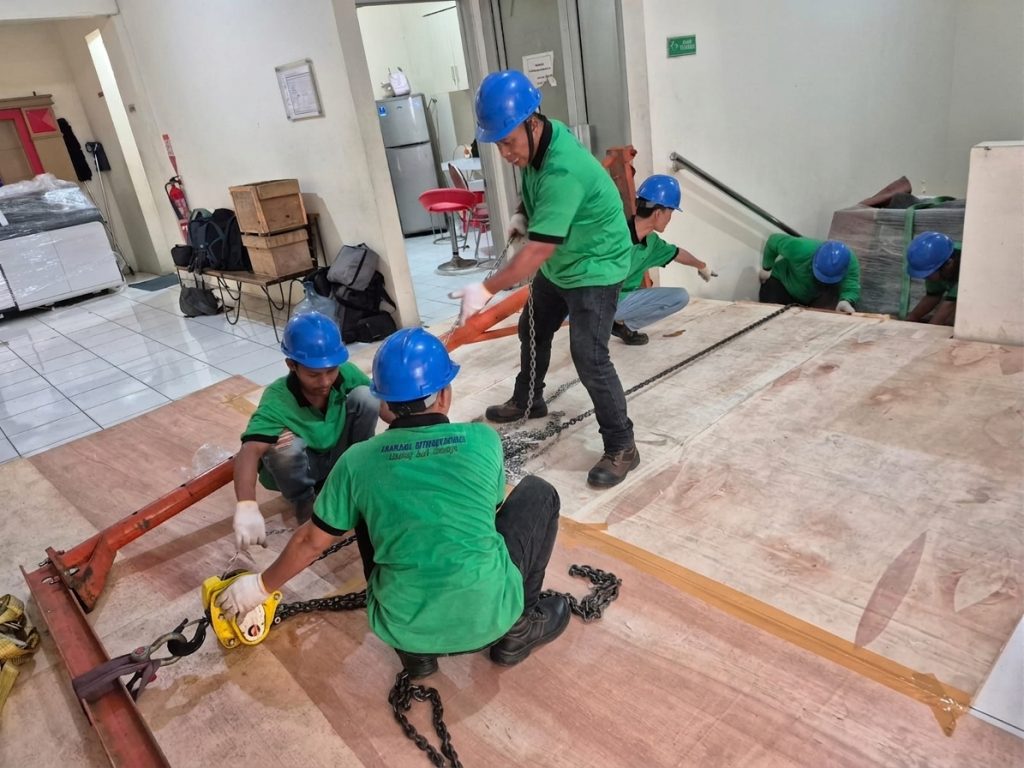
Moving medical equipment involves much more than transporting equipment from one location to another. Medical equipment handling requires careful planning, skilled manpower, suitable lifting equipment, and a controlled process.
Medical equipment such as MRI machines, CT scanners, X-Ray systems, Cath Lab equipment, laboratory equipment, and diagnostic systems can be large, heavy, valuable, and sensitive. Improper handling may cause physical damage, additional costs, operational downtime, and delays to healthcare services.
For this reason, medical equipment relocation should be managed as a specialized logistics project. Each stage requires careful planning and coordination. This includes site assessment, lifting, handling, transportation, unloading, and final positioning.
Hospitals, healthcare providers, medical equipment distributors, and other healthcare facilities can benefit from working with an experienced logistics and handling partner. The right partner can help manage the relocation process safely, efficiently, and according to the requirements of each project.
What Is Medical Equipment Handling?
Medical equipment handling refers to the process of lifting, moving, loading, transporting, unloading, and positioning medical equipment using methods and equipment appropriate to the characteristics of the equipment and the conditions of the site. Unlike conventional cargo handling, medical equipment handling requires greater attention to equipment weight, dimensions, center of gravity, lifting points, access routes, floor conditions, door and corridor dimensions, elevator capacity, loading areas, and transportation requirements. For large or heavy medical equipment, the process may require specialized equipment such as forklifts, cranes, rigging systems, hydraulic lifting equipment, machinery skates, specialized trucks, or other lifting and transportation solutions. The appropriate handling method should not be determined solely by the weight of the equipment. The physical condition of the building, available working space, access route, floor capacity, equipment configuration, and final positioning requirements should also be evaluated before the project begins.
Why Does Medical Equipment Require Specialized Handling?
Medical equipment has different characteristics from general cargo and conventional industrial machinery.
Many healthcare machines combine significant weight and size with sensitive electronic, mechanical, and precision components. MRI systems, CT scanners, X-Ray equipment, and other diagnostic machines require controlled handling throughout the relocation process.
Uncontrolled movement, impact, or unsuitable lifting methods can create risks during relocation. The equipment may also have specific handling requirements that should be reviewed before the project begins.
The building can create another challenge. Large equipment may need to pass through narrow doors, corridors, elevators, ramps, or areas with limited maneuvering space.
In some cases, standard handling methods may not be suitable.
This is why a site survey and handling assessment are important. By reviewing the route and site conditions before the operation, the logistics team can identify potential challenges and develop a suitable handling plan.
Types of Medical Equipment That May Require Heavy Handling
MRI Machines
Magnetic Resonance Imaging, commonly known as MRI, is one of the medical equipment categories that can require specialized handling due to its size, weight, configuration, and sensitivity. MRI relocation requires careful consideration of the access route, lifting method, transportation requirements, floor conditions, and final positioning area. Depending on the site, the operation may involve specialized lifting and rigging equipment. Because MRI systems are often installed in dedicated imaging rooms, moving them may also require detailed coordination with facility management and technical teams.
CT Scanners
CT scanners are another type of medical imaging equipment that may require specialized handling. The gantry and other components can be heavy and require controlled movement throughout the relocation process. Moving a CT scanner involves more than loading the equipment onto a truck. The project may require site assessment, specialized handling, equipment protection, transportation planning, unloading, and final positioning. Coordination with the technical or biomedical team may also be necessary to ensure that the equipment is correctly positioned before installation or commissioning.
X-Ray Equipment
X-Ray equipment can also require careful handling due to its electronic and mechanical components. During relocation, the equipment needs to be protected against impact, excessive vibration, scratches, and other potential physical damage. The handling method should be adapted to the equipment configuration and the environment in which it is being moved.
Cath Lab and Diagnostic Equipment
Cath Lab systems, C-Arms, laboratory equipment, diagnostic systems, and other specialized healthcare equipment may also require professional handling when relocated between rooms, buildings, or healthcare facilities. These projects often require close coordination between the logistics provider, facility management, biomedical engineers, and technical teams to minimize disruption to healthcare operations.
The Medical Equipment Handling Process
Site Survey and Assessment
The first step in a medical equipment relocation project is a detailed site survey and assessment. The team should review the equipment’s weight and dimensions as well as the available access points, doors, corridors, elevators, loading areas, ramps, stairs, floor conditions, and ceiling clearance. The entire movement route should be reviewed from the original location to the final destination. This allows the logistics team to identify potential obstacles and determine the safest and most efficient movement method. For complex projects, coordination with facility management, engineering teams, biomedical engineers, or the original equipment manufacturer may also be required.
Handling and Rigging Planning
Once the site conditions have been assessed, the next step is to develop the handling and rigging plan. Depending on the project, the operation may require forklifts, cranes, hydraulic lifting systems, machinery skates, rigging equipment, or specialized transportation vehicles. Equipment selection should consider more than the total weight of the medical equipment. Factors such as the center of gravity, lifting points, available working space, lifting height, maneuverability, and access conditions must also be considered. The objective is to achieve controlled and predictable movement throughout the handling operation.
Equipment and Facility Protection
Before the equipment is moved, appropriate protection should be prepared for both the medical equipment and the surrounding facility. Medical equipment may require protective wrapping, padding, crating, or other forms of protection depending on the project requirements. The surrounding facility should also be considered. Floors, walls, doors, elevator interiors, loading areas, and other surfaces may require protection during the movement of heavy equipment. Floor protection is particularly important when heavy medical equipment needs to be moved through hospital corridors or other finished areas. Proper protection helps reduce the risk of damage to both the equipment and the facility.
Loading and Lifting
Loading and lifting are among the most critical stages of a medical equipment handling project. The equipment must be lifted using a method that is appropriate for its weight distribution, lifting points, dimensions, and center of gravity. The lifting equipment must also have sufficient capacity for the planned operation. The movement should be controlled to prevent unwanted contact with walls, doors, ceilings, vehicles, or other structures. Once the equipment has been loaded onto the transportation vehicle, it must be properly positioned and secured to prevent movement during transportation.
Transportation
Transportation is the next stage after successful loading. Medical equipment transportation requires an appropriate vehicle, suitable securing methods, and careful route planning. The equipment should be secured to minimize movement during transit. Depending on the size and configuration of the equipment, the project may require a specialized truck or other transportation solution. Transportation planning may also consider road conditions, travel distance, weather conditions, delivery schedules, and site access at the destination.
Unloading and Positioning
Upon arrival, unloading must be performed with the same level of care applied during loading. The equipment should be unloaded using a method appropriate to the destination site’s conditions. Once inside the facility, it can be carefully moved toward its final location. Final positioning should take into account the equipment’s orientation, available clearance, floor conditions, access for installation, and technical requirements. In some projects, final positioning should be coordinated with the technical team or OEM to ensure that the equipment is placed correctly before installation and commissioning.
Heavy Equipment Handling for Medical Facilities
Heavy equipment handling in healthcare facilities requires both lifting capacity and precision.
A forklift may be suitable when the equipment weight and site access allow its use. In other situations, a crane may provide a more suitable solution.
Rigging equipment, machinery skates, and hydraulic lifting systems may also be required depending on the project.
The selection of heavy handling equipment should follow the site survey and handling assessment.
Equipment weight is only one consideration. The team should also evaluate access, working space, lifting height, floor capacity, equipment configuration, and the complete movement route.
A professional handling team should review these factors before selecting the most appropriate handling method.
Minimizing Downtime During Medical Equipment Relocation
One of the biggest challenges in medical equipment relocation is operational downtime. When an MRI, CT scanner, X-Ray system, or other diagnostic equipment is being relocated, the equipment may temporarily be unavailable for patient services. For healthcare facilities, minimizing downtime is therefore an important part of project planning. The relocation schedule should be coordinated with hospital management, facility teams, medical departments, and other relevant stakeholders. Where possible, preparation should be completed before the scheduled relocation date. Site surveys, access route planning, equipment protection, manpower requirements, lifting methods, transportation schedules, and contingency plans should all be established in advance. Effective planning allows the relocation process to be performed in a controlled manner while helping minimize disruption to healthcare operations.
Safety Considerations in Medical Equipment Handling
Safety should be a fundamental part of every medical equipment handling project. Equipment safety involves protecting the medical equipment from impact, uncontrolled movement, falling hazards, and excessive vibration. Worker safety is equally important. Personnel involved in the project should use appropriate personal protective equipment and follow established safety procedures based on the conditions of the worksite. The capacity and condition of forklifts, cranes, rigging equipment, lifting accessories, and transportation vehicles should also be assessed before use. The movement route should be checked and prepared to ensure that potential obstacles and hazards have been addressed. Effective communication between the handling team, facility management, security personnel, technical teams, and other stakeholders is also essential to maintaining a safe and organized operation.
Why Choose a Professional Medical Equipment Handling Partner?
Choosing the right logistics and handling partner can significantly reduce risks during medical equipment relocation. An experienced logistics provider can coordinate multiple stages of the project, including site assessment, handling, heavy lifting, rigging coordination, loading, transportation, unloading, and final positioning. An end-to-end logistics approach can also simplify project coordination by allowing customers to work with one primary logistics partner for multiple requirements. For high-value medical equipment, a structured handling process can provide additional control over each stage of the project and help ensure that equipment and facilities are properly protected. Professional project planning also allows potential challenges to be identified before the operation begins, reducing the possibility of unexpected delays during execution.
Medical Equipment Handling by PT Retrans International
PT Retrans International provides integrated logistics solutions covering moving, storage, distribution, and specialized handling for customers across Indonesia. With experience in handling various logistics and equipment requirements, Retrans understands that every project has its own characteristics, operational requirements, and challenges. For medical equipment handling projects, the scope can be tailored according to the equipment type, weight and dimensions, pickup location, destination, site access, lifting requirements, transportation requirements, and equipment protection needs. Depending on the project scope, Retrans can support the coordination of handling, loading, transportation, unloading, and positioning of equipment.
Retrans can also coordinate with relevant parties, including facility management, technical teams, biomedical engineers, and OEM representatives, when required as part of the project. Our objective is to provide a professional and well-coordinated logistics solution that supports the safe movement of valuable equipment while helping customers maintain operational efficiency.
Medical equipment handling is not ordinary cargo transportation.
Moving MRI machines, CT scanners, X-Ray systems, and other medical equipment requires a combination of careful planning, specialized handling, heavy lifting, equipment protection, transportation, and coordination. Every detail, from the access route and lifting capacity to floor protection, equipment securing, transportation, and final positioning, can influence the success of a relocation project. With proper planning and professional handling, medical equipment can be relocated in a safer, more controlled, and more efficient manner while helping minimize risks to the equipment, facility, and healthcare operations. PT Retrans International is ready to support your medical equipment moving, handling, storage, and distribution requirements across Indonesia.
Need Professional Medical Equipment Handling?
Does your hospital, healthcare company, medical equipment distributor, or healthcare facility require professional handling, lifting, moving, or transportation for medical equipment?
Contact PT Retrans International to discuss your project requirements. Provide the equipment type, approximate weight or dimensions, pickup location, and destination so our team can conduct an initial assessment of your handling and logistics requirements.