

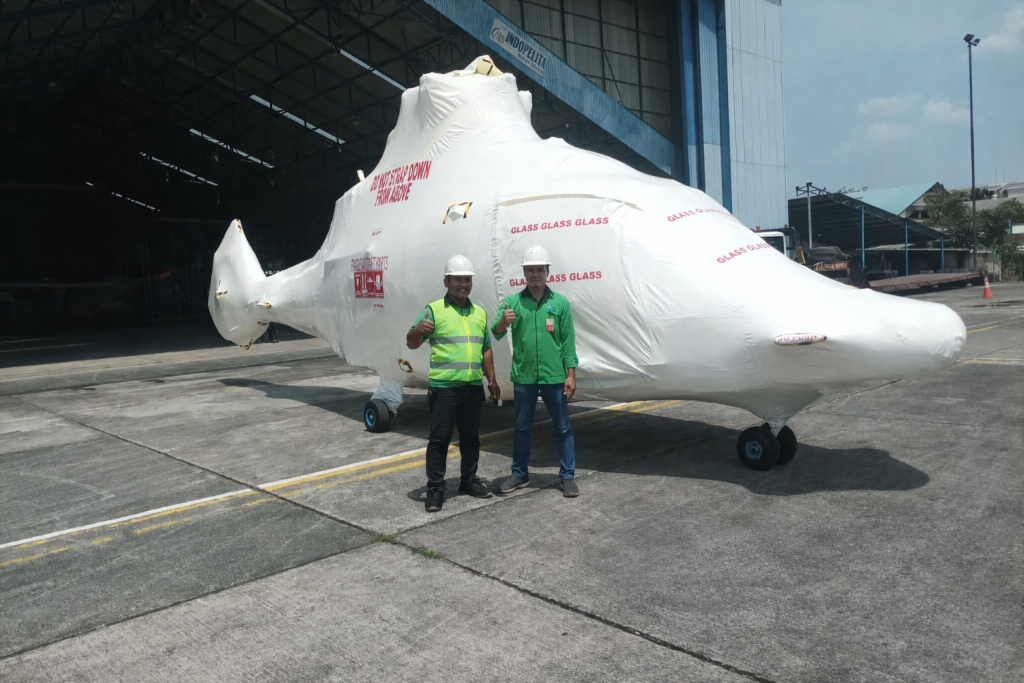
In the project logistics and aviation logistics industry, aircraft and aircraft components are high-value assets that require specialized handling. Every stage of the process—from preparation to delivery—must comply with the highest safety and quality standards. One of the most critical stages that often determines the success of a shipment is the professional aircraft wrapping process.
The Importance of Wrapping in Project Logistics
Wrapping is not merely about covering an aircraft with protective materials. It is a strategic process designed to protect the aircraft’s structure from dust, moisture, impact, and environmental changes during handling, storage, and transportation. In heavy cargo and project logistics services, even minor errors can result in material damage, project delays, or significant financial losses.
Through professional wrapping methods, every contour and section of the aircraft is protected using specialized materials tailored to the specific requirements of the aviation industry. This ensures the aircraft remains in optimal condition until it reaches its final destination.
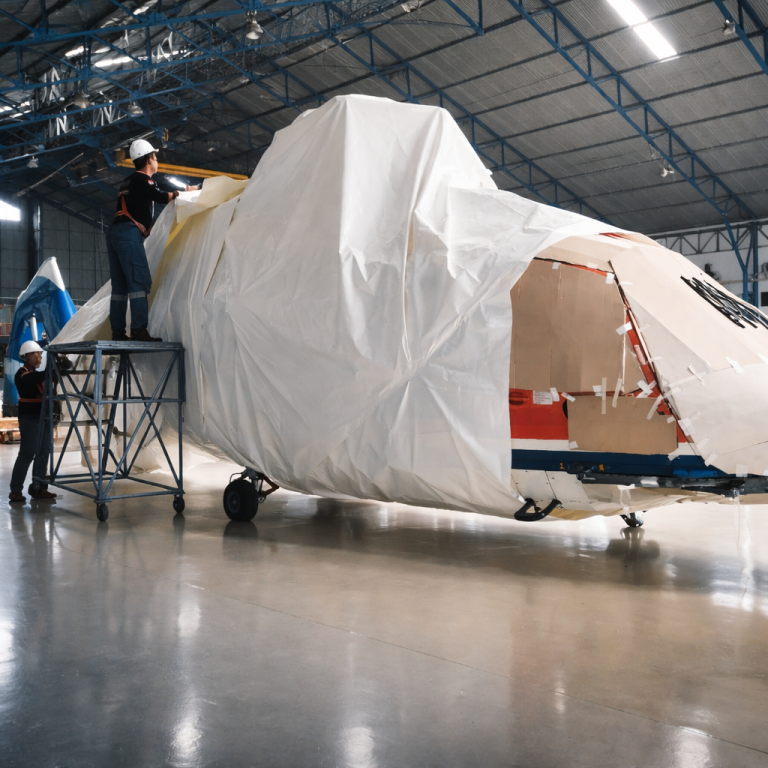
Materials and Methods Used in Aircraft Wrapping
In professional project logistics services, wrapping materials are never generic. Each project is carefully analyzed to determine:
-
The appropriate type of protective materials (moisture-resistant, dust-proof, and abrasion-resistant)
-
The required thickness and flexibility to match the aircraft’s contours
-
Secure fastening methods that protect the structure without causing damage
This approach ensures that the wrapping process is not only physically safe but also fully compliant with international aviation safety and quality control standards.
Integrating Wrapping into the Project Cargo Logistics Process
Aircraft wrapping is not a standalone activity. In project cargo logistics operations, wrapping must be seamlessly integrated with other critical stages, such as:
-
Engineering assessments
-
Loading and unloading plans
-
Land, sea, or air transportation
-
Inspection and documentation procedures
Proper coordination among all teams ensures efficient execution and minimizes the risk of project delays. This is why companies with proven experience in aviation project logistics offer significant added value to their clients.
Building Client Trust and Strengthening Corporate Reputation
For logistics service providers, the quality of the wrapping process reflects the company’s level of professionalism. Clients from the aviation, manufacturing, and government sectors tend to choose logistics partners who demonstrate strong attention to detail and safety.
By implementing professional wrapping standards, logistics companies not only protect client assets but also:
-
Build long-term client trust
-
Reduce the risk of damage claims
-
Strengthen their reputation as reliable project logistics providers
Wrapping as Part of an Integrated Aviation Logistics Solution
In the world of heavy cargo and aviation logistics, the most effective solutions are always integrated. Professionally executed aircraft wrapping serves as a fundamental component of a safe, efficient, and high-standard logistics system.
When wrapping is combined with meticulous logistics planning, experienced teams, and adequate facilities, the result is a delivery process that is timely, secure, and fully aligned with client expectations.